A Practical Guide for Architects and Interior Designers
Motorised curtains have rapidly become a standard feature in contemporary residential and hospitality design. What was once viewed as a luxury upgrade is now increasingly expected within high-end homes, boutique hotels, and premium residential developments across the UK.
For architects and interior designers responsible for shaping both the architecture and interior experience of a space, automated curtain systems are no longer simply decorative elements. They form part of the wider environmental and technological infrastructure of a building.
When integrated successfully, motorised curtains contribute to lighting control, energy efficiency, acoustic comfort, and the overall spatial experience of an interior. Curtains can respond to daylight conditions, operate as part of smart home scenes, or quietly adjust throughout the day to maintain comfort and privacy.
However, many projects encounter avoidable challenges because key considerations were overlooked during the early design and specification stages.
Issues such as inaccessible motors, insufficient structural allowance for recessed tracks, incorrect motor capacity, or incompatible automation interfaces can often emerge during installation or commissioning—when design changes are far more difficult to resolve.
Fortunately, most of these issues can be avoided through careful planning during the architectural design process.
Below are some of the most common specification pitfalls encountered when integrating motorised curtain tracks into modern buildings, and how interior designers can avoid them.
1. Underestimating Curtain Weight and Fabric Behaviour
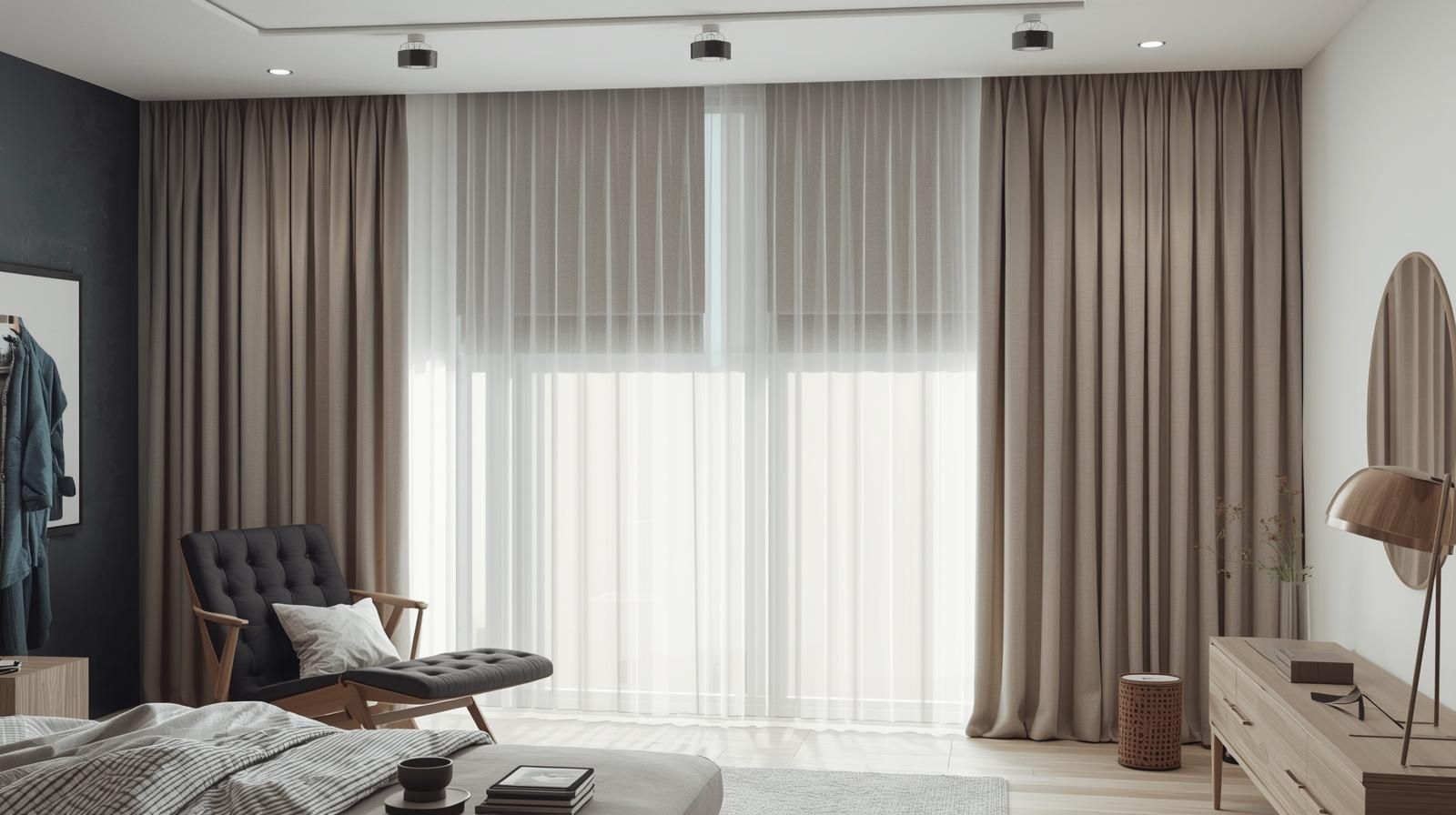
At concept stage, curtains are often considered primarily as visual elements within an interior scheme. However, once fabrics are manufactured into full-height curtains, their weight can increase significantly.
Several factors influence the final load placed on a curtain track system:
- Fabric density
- Curtain fullness and pleat style
- Blackout or thermal linings
- Curtain height and width
- Interlining or acoustic layers
For interior designers or architects specifying motorised systems, this is a critical consideration. The motor capacity must be carefully matched to the mechanical load being moved.
A track specified for lightweight sheers may struggle when paired with heavy interlined fabrics such as velvet or blackout drapery. While the system may still operate, the motor can run under constant strain.
Typical symptoms include:
- Slower curtain movement
- Increased motor noise
- Reduced motor lifespan
- Inconsistent automation behaviour
Interestingly, specifying a larger motor is not always the ideal solution. Oversized motors can produce unnecessarily aggressive movement and increased mechanical noise.
The most effective approach is to select a track and motor system designed specifically for the curtain weight and dimensions involved. This is where early collaboration between the architect, interior designer, and curtain system specialist can prevent problems later in the project.
2. Leaving Power Planning Too Late
One of the most common coordination challenges arises when electrical provision for motorised curtain tracks is considered too late in the design process.
Motorised curtain systems generally fall into two categories:
Hardwired curtain systems
Hardwired systems connect directly into the building’s electrical infrastructure and are typically preferred for new-build projects or high-end residential developments.
From an architectural perspective, these systems allow the cleanest installation. Power can be discreetly routed within ceiling voids or curtain recesses, avoiding visible cables and simplifying long-term maintenance.
Hardwired motors also provide the most reliable interface with building automation systems.
Battery powered curtain systems
Battery-powered curtain tracks provide excellent flexibility in retrofit projects or locations where electrical cabling would be difficult to install.
However, these systems still require careful design coordination.
Without early planning, issues may arise such as:
- inaccessible charging ports
- awkward motor positioning
- visible charging cables
- limited access for maintenance
Modern battery systems have improved considerably in recent years, but they should still be selected carefully when curtain sizes or fabric weights are substantial.
3. Overlooking Automation Compatibility
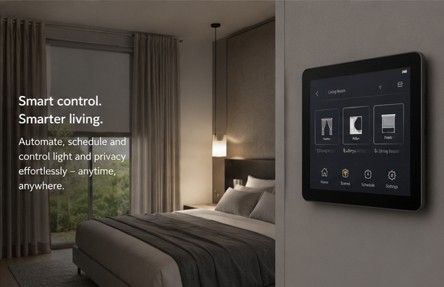
In modern homes and hospitality environments, curtains rarely operate as standalone elements. They are increasingly integrated into wider building automation systems.
Architects are now frequently coordinating motorised curtain systems with platforms such as:
- Lutron
- Control4
- KNX Association
- Rako Controls
- Loxone
Curtains may also be controlled via voice assistants including:
- Amazon Alexa
- Google Assistant
Curtain motors typically support several control interfaces, including:
- Dry contact control
- RF remote control
- Wi-Fi / app-based control
- KNX communication
- SMI motor protocols
For architects coordinating technical consultants and integrators, confirming the required control interface early can avoid complications later.
Integrators often prefer wired control methods such as dry contact, KNX, or SMI, as these provide stable communication within the wider automation architecture of the building.
4. Insufficient Allowance for Recessed Tracks and Ceiling Details
Architectural detailing plays a significant role in the visual success of motorised curtain systems.
Many contemporary projects favour recessed curtain tracks or concealed ceiling pockets that allow the curtain system to disappear into the architecture.
However, this detail requires careful coordination during the design stage.
Common issues include:
- insufficient recess depth
- inadequate allowance for motor dimensions
- limited access for maintenance
- clashes with lighting or HVAC systems
Considering curtain stack-back space—the area required when curtains are fully open. Without sufficient allowance, curtains may obstruct glazing or reduce daylight penetration.
Coordinating curtain recesses alongside lighting channels, ceiling coffers, and air conditioning diffusers can significantly improve the overall integration of the system within the architectural design.
5. Incorrect Track Layout and Window Geometry
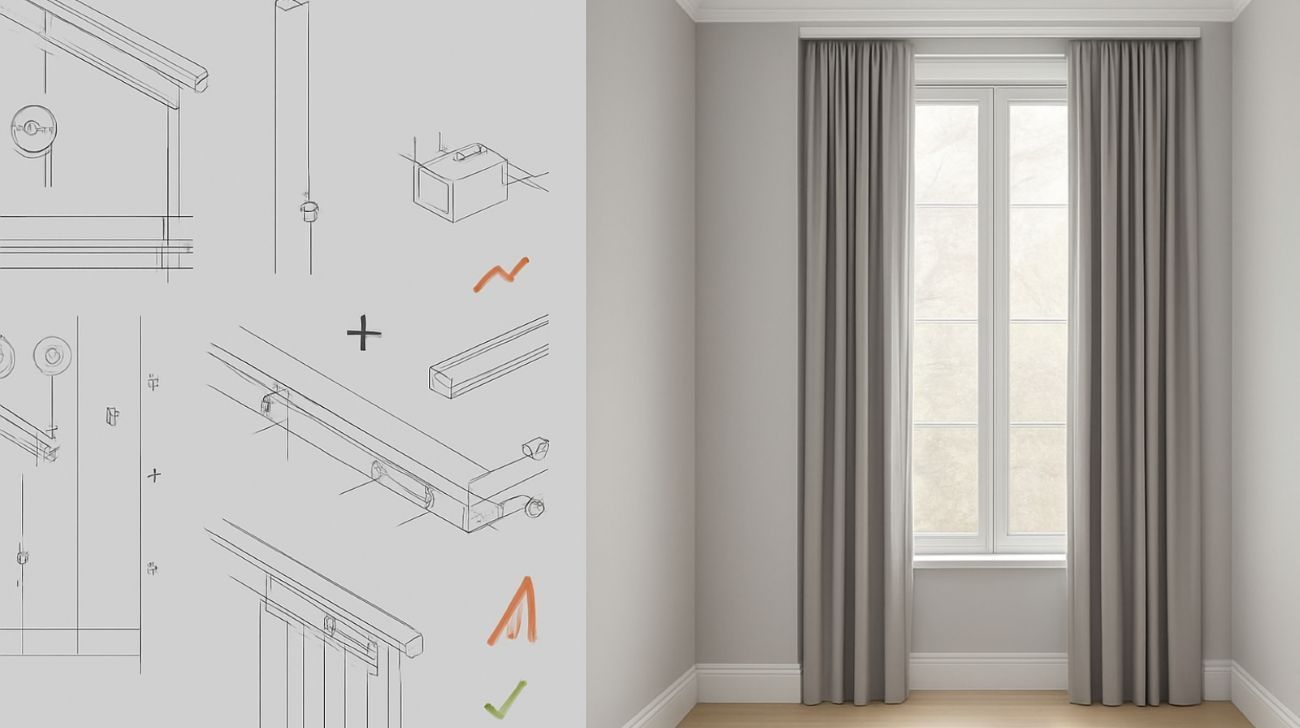
Motorised curtain tracks rely on smooth mechanical movement. Even minor dimensional inaccuracies can affect system performance.
Common specification challenges include:
- incorrect track lengths
- inaccurate recess measurements
- overlooking structural obstructions
- insufficient stack-back space
- complex bay or curved window geometries
Curved glazing, bay windows, and corner windows often require specialised curved motorised tracks designed to maintain smooth movement around the bend.
Attempting to use standard straight systems in these situations can create friction and inconsistent operation.
Careful planning during the architectural design stage ensures the curtain system performs reliably once installed.
The Architectural Benefits of Well-Integrated Motorised Curtains
When specified correctly, automated curtain systems contribute significantly to the performance and experience of an interior.
Improved daylight management
Curtains can respond automatically to changing daylight conditions, improving comfort while maintaining natural light within the space.
Enhanced energy efficiency
Automated curtains can reduce heat loss during colder months and limit solar gain during warmer periods.
Improved acoustic comfort
Curtain fabrics can soften acoustics in large or open-plan interiors, improving the quality of the space.
Seamless architectural integration
Recessed track systems allow curtain mechanisms to disappear within ceilings or architectural details, maintaining clean lines within the interior.
Everyday comfort and convenience
For occupants, automated curtains offer effortless control via wall keypads, voice commands, or automated scenes.
Why Early Collaboration Matters
For architects and interior designers, successful projects depend on careful coordination between multiple technical disciplines.
Motorised curtain systems sit at the intersection of architecture, interior design, electrical infrastructure, and building automation.
When considered early in the design process, these systems integrate seamlessly within the architectural language of the building.
However, when specification decisions are left too late, installation challenges can arise that compromise both performance and design intent.
At Raex Motors, we regularly work alongside architects, interior designers, and smart home integrators to help ensure curtain systems are specified correctly from the outset.
By reviewing window schedules, ceiling details, curtain sizes, and control requirements, potential issues can often be identified early—long before installation begins.
Architects are always welcome to share drawings, design concepts, or project plans for review so that the most appropriate motorised curtain track solution can be recommended.
This collaborative approach helps simplify installation, maintain design integrity, and ensure the finished system performs as intended.
A Final Thought
Motorised curtains represent a subtle but powerful element within contemporary architecture.
When the mechanical, electrical, and design considerations are aligned from the start, curtain systems integrate effortlessly into the architecture of the space.
By addressing the common pitfalls outlined above, architects and interior designers can ensure their projects benefit from curtain systems that operate quietly, reliably, and seamlessly within the wider design vision.
For more information or specification advice Call us on: 01283 244022