
Understanding Load Beyond the Fabric
At concept stage, fabrics are often selected based on aesthetics, with limited consideration given to how they will behave once fitted on to a working blind.
Roman blinds lift fabric rather than roll it, meaning the mechanical load is significantly influenced by:
interlining and blackout layers
fullness and pleat structure
overall width and drop
Once constructed, the finished blind can weigh considerably more than anticipated.
If this is not accounted for early, systems may operate under strain—resulting in slower movement, increased noise, or reduced lifespan.
The key is to specify the lifting system based on the finished blind weight, not just the base fabric. Early dialogue between designer, workroom, and system supplier can prevent this becoming an issue later.
The Impact of Stack Height on Architecture
One of the most common issues in Roman blind specification is stack height—the volume of fabric that gathers at the top when the blind is raised.
In isolation this may seem minor, but in practice it directly affects:
visible glazing area
daylight penetration
alignment with architectural details
In minimal or contemporary interiors, excessive stack height can interrupt clean sightlines or reduce the intended impact of full-height glazing.
Allowing for this early—particularly when coordinating with recesses, pelmets, or ceiling details—ensures the blind integrates visually rather than competing with the architecture.
When Size Pushes the Limits
Large window openings continue to be a defining feature of modern architecture, but they can present challenges for Roman blind systems.
Attempting to cover wide spans with a single blind often leads to:
uneven lifting
fabric sagging
increased strain on lifting mechanisms
In many cases, dividing the opening into multiple blinds or reconsidering the shading strategy altogether will produce a more reliable and refined outcome.
Understanding the practical limits of the system at design stage is essential—particularly in projects where both performance and longevity are critical.
Integration Is No Longer Optional
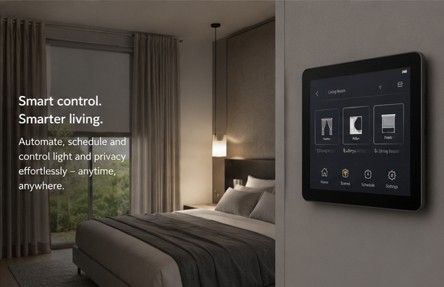
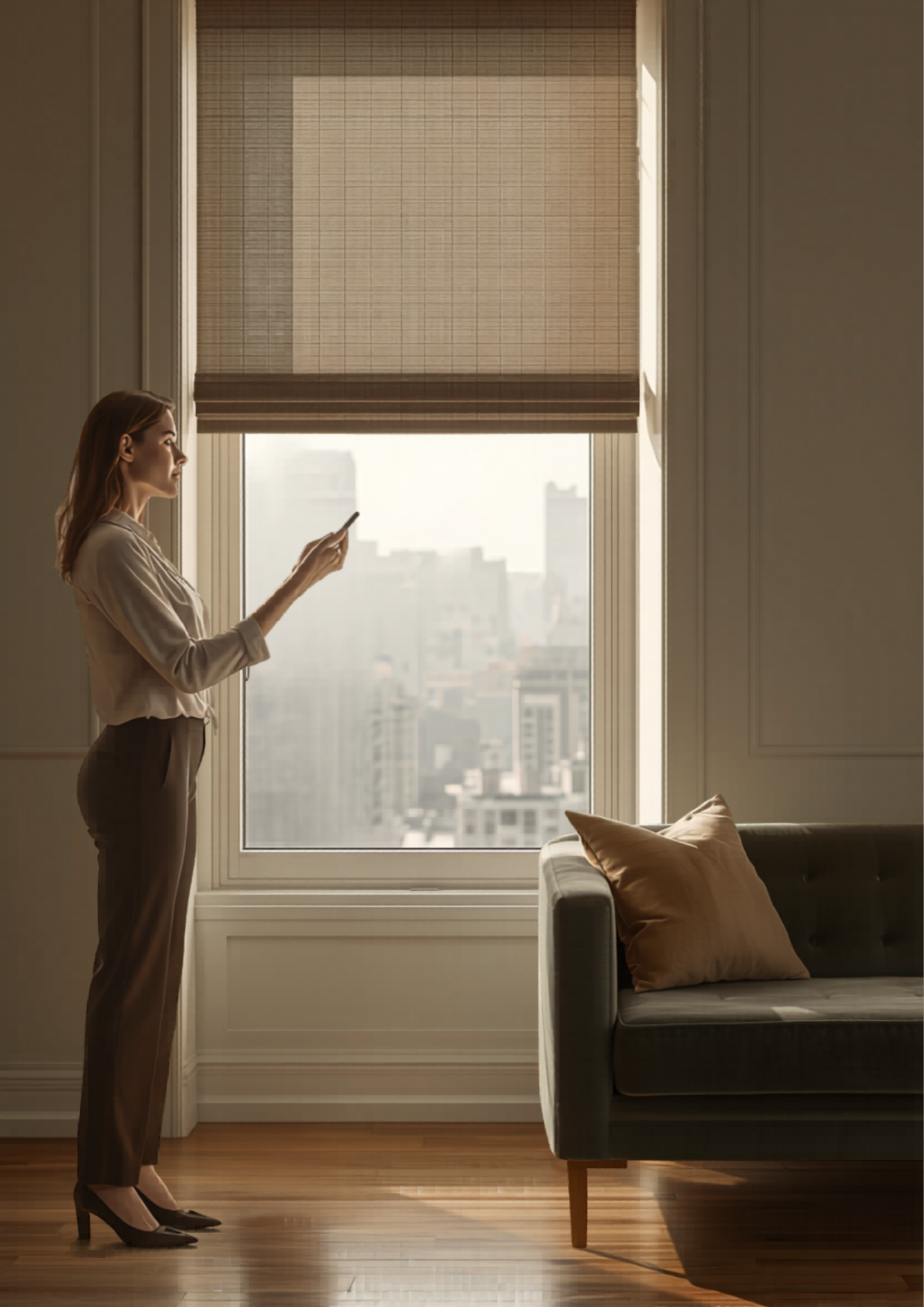
Motorised Roman blinds are rarely standalone elements. They are typically specified as part of a wider control strategy, integrated with lighting, climate, and user interaction systems—rather than operating within closed ecosystems that rely on dedicated hubs and offer limited interoperability.
Systems are commonly integrated with platforms such as Lutron, Loxone, Rako, Control4 or KNX Association, and increasingly form part of programmed scenes or automated routines.
Challenges arise when this integration is not defined early. Incompatible control methods can lead to the introduction of additional interfaces, increased complexity, and compromised reliability.
Confirming the intended control approach—whether wired or wireless—at specification stage allows the system to be designed as part of the wider architectural and technological framework, rather than retrofitted into it.
Power, Access and Long-Term Usability
The decision between hardwired and battery-powered systems is often driven by project constraints, but both require careful planning.
Hardwired systems offer the cleanest integration and are typically preferred in new-build or fully coordinated schemes. Battery systems provide flexibility but introduce a different set of considerations—particularly around access for charging and maintenance.
Common issues arise where:
motors are positioned in inaccessible locations
charging points are difficult to reach
cables become visible within otherwise refined interiors
Designing for long-term usability—not just initial installation—is key to maintaining both performance and aesthetic integrity.
Coordination at the Headrail
The headrail is the functional core of the system, yet its positioning is often left until late in the process.
Conflicts can occur with:
window handles
opening directions
joinery or pelmet details
In some cases, blinds cannot operate fully due to spatial constraints that could have been resolved earlier.
Coordinating the headrail position alongside window design and interior detailing ensures the system functions as intended without compromise.
Aligning Design Intent with Real-World Use
Roman blinds are often chosen for their softness and visual appeal, but their suitability should also be considered in relation to how the space will be used.
In areas requiring frequent operation, or in high-traffic environments, repeated movement can place additional stress on both fabric and mechanism.
Ensuring the selected system and fabric are appropriate for the level of use helps avoid premature wear and ongoing maintenance issues.