Battery vs Mains powered Electric Curtains and Blinds

Battery vs Mains Powered Electric Curtain Tracks, Roman Blinds and Roller Blinds: Which is the Best Choice?
As demand for home automation continues to grow, motorised window treatments are becoming an increasingly common feature in both residential and commercial projects. Whether specifying electric curtain tracks, motorised Roman blinds or automated roller blinds, one of the first decisions designers, retailers, installers and specifiers must make is whether to choose a battery-powered or mains-powered system.
While there is often debate about which option is superior, the reality is that both technologies have their place. The most successful installations are typically those where the power source has been selected based on the practical requirements of the project rather than personal preference or an afterthought.
Understanding the advantages and limitations of both battery and mains-powered systems can help ensure the right solution is chosen from the outset.
The Rise of Motorised Window Treatments
Motorised systems are no longer reserved for luxury properties. Improvements in technology, reduced installation costs and growing consumer awareness have made automation accessible to a much wider audience.
Motorised systems offer a range of benefits including:
- Improved convenience and ease of use
- Enhanced child safety by eliminating operating cords
- Better management of daylight and privacy
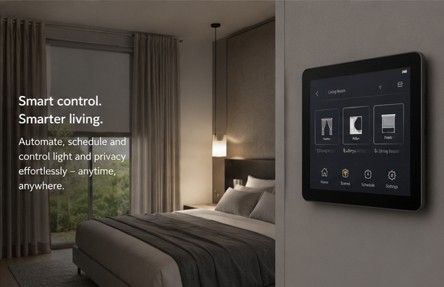
- Integration with smart home systems
- Scheduled opening and closing for Security
- Temperature management / energy efficiency
- Assistance for elderly users or those with limited mobility
As these products become increasingly mainstream, the choice between battery and mains power has become one of the most important specification decisions.

Understanding Battery-Powered Systems
Battery-powered motorisation uses rechargeable lithium-ion batteries to operate the motor without requiring a permanent mains electrical connection.
In recent years, battery technology has improved significantly, allowing many systems to operate for months between charges under normal usage conditions.
This development has transformed battery-powered electric curtain tracks and blinds from a niche solution into a practical option for many applications.
Advantages of Battery-Powered Curtain Tracks and Blinds
Simpler Installation
The most obvious advantage is the absence of mains wiring.
Because no electrical connection is required at the window, installation can often be completed with minimal disruption. This is particularly attractive in existing homes where decorating has already been completed.
For interior designers and installers, this flexibility can simplify project delivery and reduce overall installation costs.
Ideal for Retrofit Projects
Battery-powered systems are particularly useful when adding automation to existing properties.
Rather than chasing cables into walls or ceilings, installers can fit motorised curtain tracks or blinds with little impact on the surrounding finishes.
This makes battery solutions especially popular for:
- Renovation projects
- Listed buildings
- Apartments
- Rental properties
- Finished interiors
- Difficult-to-access wiring locations
Faster Project Completion
Without the need for electrical works, installation schedules can often be shortened. This can be beneficial when projects are operating to tight deadlines or where multiple trades are involved.
Lower Upfront Installation Costs
Although the motor itself may cost a similar amount to a mains-powered equivalent, installation costs can often be lower due to reduced labour and electrical requirements.
The Limitations of Battery-Powered Systems
Despite their growing popularity, battery-powered solutions are not perfect for every application.
Ongoing Charging Requirements
The most obvious drawback is that batteries eventually require recharging and have a finite life span.
Modern systems can often achieve several months of operation between charges, but usage patterns vary significantly depending on:
- Curtain weight
- Blind size
- Frequency of operation
- Opening distance
- Environmental conditions
For many homeowners, charging once or twice a year is a minor inconvenience. However, for commercial environments or inaccessible installations, it can become a consideration.
Access Considerations
Windows located in stairwells, double-height spaces or difficult-to-reach areas may not be ideal candidates for battery-powered systems if charging access is restricted.
Performance on Very Large Installations
Battery motors continue to improve, but mains-powered systems generally remain the preferred choice for exceptionally large or heavy curtains that operate frequently.
Understanding Mains-Powered Systems
Mains-powered electric curtain tracks, Roman blinds and roller blinds are permanently connected to the building's electrical supply.
For many years this was the standard approach to motorisation and remains the preferred option for many premium residential and commercial projects.
Advantages of Mains-Powered Systems
Continuous Power Availability
Perhaps the greatest benefit is that power is always available.
There is no requirement to monitor battery levels, recharge units or plan maintenance around charging schedules.
For clients seeking a truly "fit and forget" solution, mains-powered systems offer significant advantages.
Ideal for Heavy Curtains
Large curtain installations often place greater demands on motors.
Mains-powered motors typically provide higher continuous power and are frequently specified for:
- Wide curtain spans
- Heavy interlined curtains
- Hotel installations
- Commercial environments
- High-use applications
Well Suited to Smart Home Integration
Many modern motorised curtain tracks and blinds can integrate with smart home platforms regardless of power source. However, mains-powered systems are often favoured in larger automation projects because power availability is constant and they have a wider range of connectivity.
Integration may include:
- Voice control
- Automated schedules
- Scene control
- Sunlight and temperature sensors
- Building management systems
Common platforms include Control4, Loxone, KNX, Rako, Crestron, Google Home and Alexa-enabled systems.
Long-Term Convenience
Once installed, mains-powered systems generally require little ongoing attention from the user.
This makes them particularly attractive for luxury residential properties and commercial environments where reliability is a key consideration.
The Limitations of Mains Power
Increased Installation Requirements
The biggest disadvantage is the need for electrical cabling.
In new-build projects this can often be incorporated during the first fix stage. However, in existing properties, introducing power supplies may require additional electrical work and decorative repairs.
Higher Installation Costs
Additional labour and wiring requirements can increase overall project costs, particularly when retrofitting motorisation into completed buildings.
Reduced Flexibility
Once wiring locations have been established, making changes later in the project can become more difficult and potentially more expensive.
Battery vs Mains Power: Which Performs Better?
This is perhaps the most common question asked by specifiers and homeowners.
The honest answer is that neither technology is universally better.
Battery-powered systems often provide the greatest flexibility and easiest installation.
Mains-powered systems generally offer the greatest convenience and long-term operational simplicity.
The decision should be based on the requirements of the individual project rather than assumptions about one technology being superior to the other.
Typical Specification Recommendations
Battery-powered systems are often recommended for:
- Existing homes
- Retrofit installations
- Listed properties
- Smaller curtain tracks
- Roman blinds
- Roller blinds
- Projects where wiring is difficult
Mains-powered systems are often recommended for:
- New-build developments
- Major renovations
- Large curtain installations
- Commercial buildings
- Smart-home-focused projects
- Frequently operated systems
Looking to the Future
Battery technology continues to advance, with improved energy density, faster charging and longer operating life becoming increasingly common.
At the same time, smart-home integration is becoming more sophisticated, allowing both battery and mains-powered systems to operate seamlessly within wider automation ecosystems.
As a result, the gap between the two technologies is narrowing.
For many projects, the choice is no longer driven by performance limitations but by practical installation considerations.
Conclusion
When specifying electric curtain tracks, motorised curtain tracks, electric curtains, Roman blinds or roller blinds, selecting the right power source is one of the most important decisions in the design process.
Battery-powered systems offer outstanding flexibility, easier installation and excellent performance for many residential applications.
Mains-powered systems provide continuous operation, minimal maintenance and are often the preferred choice for larger or more heavily automated projects.
Neither solution is inherently better. The most successful installations are those where the chosen technology aligns with the project's design goals, installation constraints and long-term expectations.
For designers, retailers, installers and specifiers, understanding the strengths of both approaches ensures that clients receive a solution that delivers reliability, convenience and lasting value.